Beyond Borders, Purely for Humanity. Help us heal the wounds of those who lost everything in Gaza.

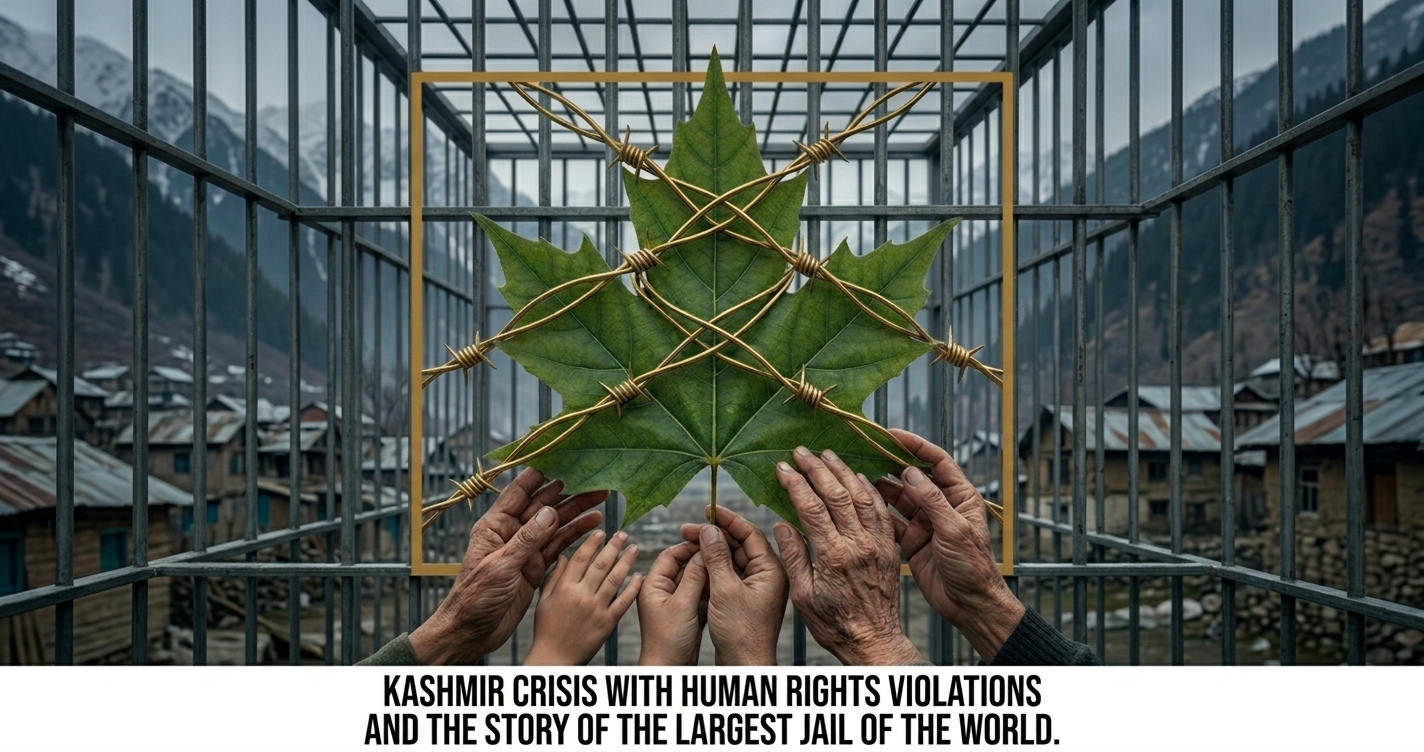
Kashmir Crisis 2026: Human Rights Violations, Education & Crisis
Explore the Kashmir crisis 2026, including human rights violations in Kashmir, education crisis, and economic challenges. Learn about life in Kashmir today, internet shutdowns, and the impact on civilians.
Team Human Relief Organization
3/24/20264 min read
Kashmir Crisis 2026: Human Rights Violations, Education Crisis, and Economic Struggles in Kashmir
The Kashmir crisis remains one of the most discussed and sensitive issues in the world today. While many people see it as a political or territorial dispute, the reality on the ground tells a deeper story, one of human struggle, disrupted lives, and ongoing uncertainty. Over the past five years, especially after the 2019 constitutional changes by India, global attention has increasingly shifted toward the humanitarian side of the conflict. Today, search trends show a growing interest in topics like human rights in Kashmir, Kashmir human rights violations, and life in Kashmir today.
For ordinary people living in Kashmir, daily life is shaped by uncertainty. Basic routines such as going to school, running a business, or even communicating with loved ones are often affected by restrictions and instability. This makes the Kashmir situation today not just a political issue, but a humanitarian concern that affects millions.
Human Rights in Kashmir: A Growing Global Concern
One of the most widely discussed aspects of the Kashmir crisis 2026 is the issue of human rights. In recent years, multiple reports and observations have highlighted concerns related to Kashmir human rights violations. These include restrictions on freedom of speech, limited press freedom, and challenges faced by journalists and activists.
A major issue that frequently appears in global discussions is the internet shutdown in Kashmir. The region has experienced repeated internet blackouts, which directly impact communication, access to information, and basic services. In today’s digital world, internet access is essential—not only for social connection but also for education, healthcare, and economic activity. When internet services are suspended, it disrupts almost every aspect of daily life.
There have also been concerns regarding detentions and limitations on movement. Families often face uncertainty when individuals are taken into custody, and legal processes can sometimes be unclear or prolonged. International organizations such as the United Nations and Amnesty International have repeatedly called for the protection of fundamental rights in the region.
As a result, human rights in Kashmir has become one of the most searched and discussed global topics, reflecting increasing awareness and concern.
Education Crisis in Kashmir
Another major issue connected to the Kashmir crisis is the education crisis in Kashmir. Education is a basic human right, yet thousands of students in Kashmir face ongoing disruptions in their academic lives.
Frequent curfews, school closures, and internet shutdowns have made it difficult for students to maintain consistent learning. During periods of restriction, schools often remain closed for extended durations. Even when online education is introduced as an alternative, it does not fully solve the problem because stable internet access is not always available.
In rural areas, the situation is even more challenging. Limited infrastructure, lack of resources, and difficult terrain already make access to education difficult. When additional restrictions are imposed, students fall further behind. Many students experience delays in completing their studies, while others struggle with exam preparation and academic continuity.
Teachers also face significant challenges. Completing the syllabus on time becomes difficult, and the quality of education may decline due to irregular attendance and disruptions. This ongoing situation has turned education crisis in Kashmir into a major concern not only locally but also internationally.
Kashmir Economic Crisis: Impact on Livelihoods
The Kashmir economic crisis is another critical aspect of the broader conflict. Kashmir’s economy largely depends on tourism, agriculture, and small businesses. When stability is affected, these sectors experience immediate and severe impacts.
Tourism in Kashmir, once a major source of income, has faced repeated setbacks. During times of tension or restrictions, tourist numbers drop significantly. This directly affects hotel owners, houseboat operators, tour guides, taxi drivers, and small shopkeepers. Many families rely entirely on tourism for their livelihood, and disruptions can lead to financial instability.
Agriculture is also a key part of the economy, particularly apple farming. Kashmir is known for its apple production, but farmers often face challenges in transporting goods to markets due to road restrictions or logistical issues. Delays can result in financial losses and reduced income for farming communities.
In addition, the digital economy has been affected by internet shutdowns. Freelancers, online business owners, and students engaged in remote work lose opportunities when internet access is restricted. This has made Kashmir economic crisis a widely searched topic, as people seek to understand the real-life impact on livelihoods.
Daily Life in Kashmir Today
Life in Kashmir today is shaped by a combination of social, economic, and political challenges. For many families, daily routines depend on the situation at any given time. A normal day can quickly change due to unexpected restrictions or developments.
Young people in particular face uncertainty about their future. With interruptions in education and limited job opportunities, many struggle to plan long-term careers. This creates a sense of instability and concern about the future.
Mental health is another important aspect that is often overlooked. Living in an environment of uncertainty can lead to stress and anxiety. Children growing up in such conditions may also experience emotional and psychological challenges.
The phrase life in Kashmir today reflects these realities, and it continues to gain attention as people around the world try to understand what daily life looks like in the region.
Global Attention and Why Kashmir Matters
The Kashmir crisis 2026 is not just a regional issue , it has global significance. The involvement of nuclear-armed neighbors and the strategic importance of the region make it a topic of international concern.
Organizations like the United Nations continue to emphasize the importance of peaceful resolution and protection of human rights. Similarly, global audiences are increasingly searching for Kashmir news, Kashmir latest updates, and Kashmir situation today, indicating rising awareness.
The global community plays an important role in highlighting humanitarian concerns and encouraging dialogue. Increased awareness can lead to more informed discussions and, potentially, constructive solutions.
Current Situation in 2026
As of 2026, the situation in Kashmir shows a mix of stability and ongoing challenges. In some areas, tourism has started to recover, and development projects are being introduced. Infrastructure improvements and economic initiatives offer some hope for progress.
However, core issues related to human rights, education, and economic stability remain unresolved. The Kashmir situation today is therefore complex—it includes both signs of improvement and persistent challenges.
Conclusion
The Kashmir crisis is no longer just about territory or politics—it is about people, their rights, and their daily lives. Over the past five years, the focus has increasingly shifted toward humanitarian concerns, including human rights in Kashmir, the education crisis in Kashmir, and the Kashmir economic crisis.
For real and lasting change, attention must be given to improving the quality of life for the people of Kashmir. Ensuring access to education, protecting human rights, and creating economic opportunities are essential steps toward stability.
As global awareness continues to grow, the hope remains that meaningful efforts will be made to address these challenges and create a more secure and stable future for the people of Kashmir.
Human Relief Organization
Human Relief Organization is a global humanitarian organization providing emergency relief and sustainable community support.


© 2026 Human Relief Organization. All rights reserved.
Contact
Email : info@thehro.org
Türkiye: +90 534 015 1196
Pakistan: +92 304 531 1241
Offices
Istanbul Office - Türkiye
Rawalpindi Office - Pakistan