Beyond Borders, Purely for Humanity. Help us heal the wounds of those who lost everything in Gaza.
How Humanitarian Aid Reaches Gaza in 2026: From Donation to Distribution
Learn how humanitarian aid reaches Gaza in 2026, from donation collection and logistics to transparent food, water and medical relief distribution for families in crisis.
Editorial Team – Human Relief Organization
2/27/20262 min read
How Humanitarian Aid Reaches Gaza: From Donation to Distribution
Humanitarian aid plays a critical role in supporting families affected by crisis in Gaza. Many people contribute to relief efforts, but few understand how aid actually moves from a donation to a family in need. Transparency in humanitarian operations builds trust and ensures that support reaches vulnerable communities efficiently.
Understanding the journey of humanitarian aid helps donors see the real impact of their contributions.
The First Step: Donations and Resource Allocation
Every humanitarian response begins with funding and resource mobilization. Donations collected by humanitarian organizations are carefully allocated to priority needs such as food, water, medical supplies and shelter assistance.
Relief planning teams assess:
Urgent community needs
Accessibility of affected areas
Available supply chains
Security considerations
Budgets are structured to maximize impact while maintaining transparency and accountability. Responsible organizations ensure that funds are directed toward life-saving interventions rather than administrative excess.
Procurement and Supply Preparation
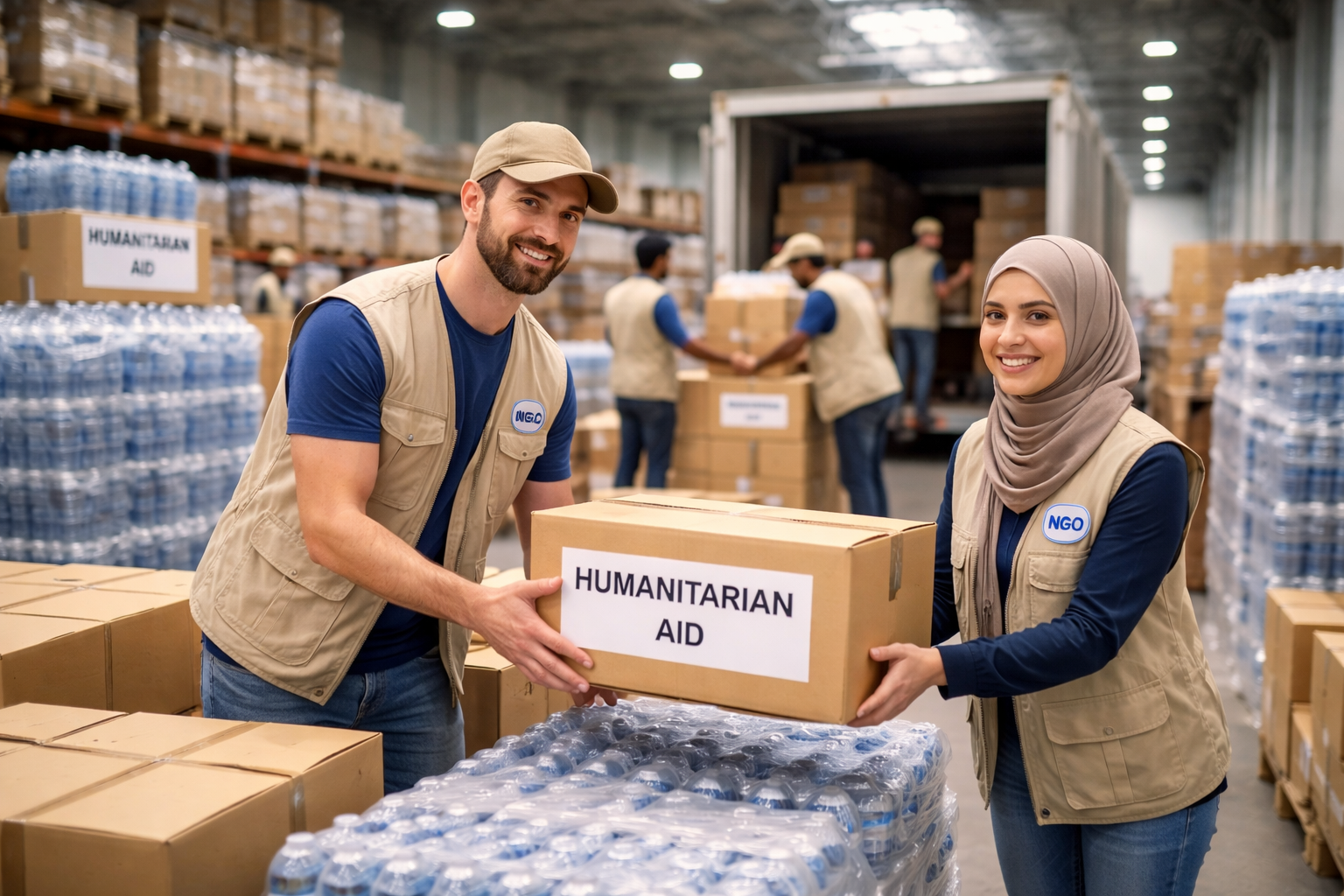
Once needs are identified, humanitarian teams begin procurement. This involves sourcing essential supplies such as:
Food parcels and nutritional items
Bottled or purified drinking water
Hygiene kits
Medical supplies and first aid materials
Temporary shelter materials
Procurement is handled through trusted suppliers to ensure quality and safety standards. In many cases, organizations work with local vendors when possible to support local economies while accelerating delivery timelines.
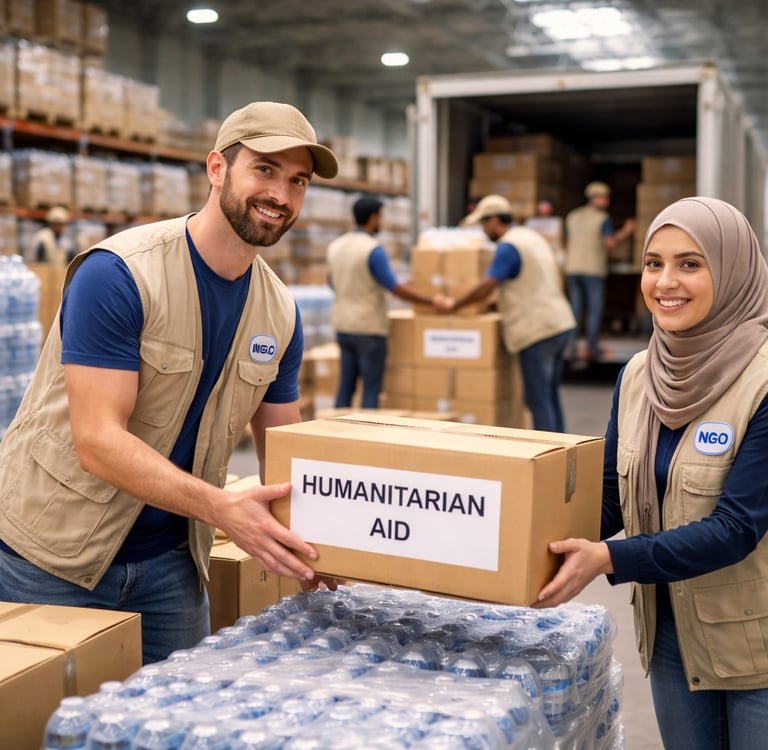
All materials are checked, packaged and prepared for transport.
Logistics and Transportation Challenges
Transporting humanitarian aid into crisis zones can be complex. Gaza presents logistical challenges due to infrastructure damage, border controls and limited access routes.
Humanitarian organizations coordinate with relevant authorities and partners to ensure that aid convoys move safely and efficiently. Timing is critical, especially when delivering medical supplies and perishable goods.
In emergency situations, rapid response mechanisms are activated to reduce delays and prioritize urgent cases.
Local Coordination and Distribution
Once aid reaches entry points or storage facilities, local coordination becomes essential. Distribution plans are designed to ensure fairness and reach the most vulnerable groups, including:
Displaced families
Children and elderly individuals
People with disabilities
Households with limited income
Distribution may occur through:
Community centers
Temporary shelters
Partner clinics
Door-to-door outreach in critical cases
Verification processes help ensure that assistance reaches intended beneficiaries while minimizing duplication.
Monitoring and Accountability
A key part of humanitarian aid delivery is monitoring and evaluation. Organizations track:
Quantity of supplies delivered
Number of families supported
Geographic coverage
Feedback from communities
Accountability measures strengthen transparency and donor confidence. Responsible humanitarian organizations maintain documentation and reporting systems to demonstrate measurable impact.
Community feedback also plays a vital role in improving future interventions.
The Role of Partnerships
Humanitarian operations rarely function in isolation. Partnerships with local volunteers, medical professionals and community leaders increase efficiency and cultural understanding.
Collaboration ensures that aid delivery respects local dynamics and addresses real needs rather than assumptions.
Strong partnerships improve response speed and long-term sustainability.
How Your Support Makes a Difference
Every donation contributes to the structured process that moves aid from planning to distribution. When individuals support humanitarian programs, they help:
Fund essential food distributions
Provide clean water solutions
Supply medical aid to injured civilians
Support displaced families with shelter materials
Collective support strengthens humanitarian response systems and expands reach.
Humanitarian aid is not only about supplies — it is about restoring dignity, stability and hope.
Building Sustainable Recovery
While emergency aid addresses immediate needs, long-term recovery requires sustained commitment. Infrastructure rebuilding, healthcare strengthening and community support programs are critical for stability.
Transparent humanitarian operations build trust and enable communities to transition from crisis survival toward resilience.
Through coordinated effort and responsible support, humanitarian aid can create meaningful and lasting impact in Gaza.
For a complete overview of the current situation, read our full report on the Gaza humanitarian crisis 2026.
Support families in need. Donate today to help deliver life-saving relief.
Human Relief Organization
Human Relief Organization is a global humanitarian organization providing emergency relief and sustainable community support.

© 2026 Human Relief Organization. All rights reserved.
Contact
Email : info@thehro.org
Türkiye: +90 534 015 1196
Pakistan: +92 304 531 1241
Offices
Istanbul Office - Türkiye
Rawalpindi Office - Pakistan